Live-Dealer Stream or Animated Table? How Each Format Shapes a Casino Game
Compare a live-dealer stream with an animated casino table to see how pace, visual cues and viewer role change the feel of the same game.
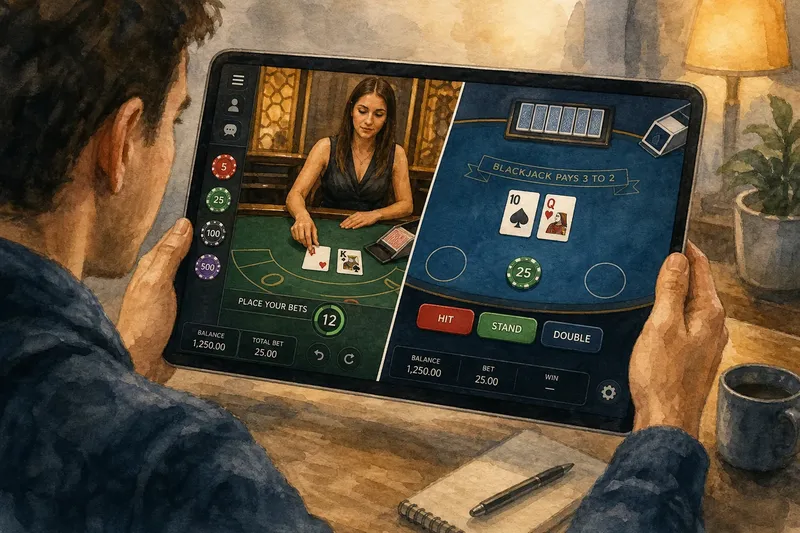
Which feels clearer: watching a dealer turn a physical card, or seeing an animated table resolve the same game? A live-dealer stream and an animated casino table can present familiar rules, yet they give the viewer different cues about pace, information and participation. The distinction is less about which looks more convincing and more about what each screen asks you to notice.
A live-dealer stream makes the table a visible event
A live stream places a camera on a real table and sends its image to the screen. The dealer’s gestures, the felt, the cards or wheel, and the movement of chips form one continuous scene. Interface elements sit around that scene: a betting panel, a timer, game history or a chat window.
That arrangement gives physical actions a prominent role. A card being turned is a visible event, not merely a graphic changing state. The camera can also carry background detail, such as the dealer’s hands moving into view or the layout of the table. These details can make the game easier to read as a sequence of actions, though the stream’s framing determines what is actually visible.
The format has a human presence, but it is not the same as being at a table. The viewer sees a camera’s chosen angle, not every detail in the room. A close shot may make a card easy to see while hiding the wider layout; a wider shot may show the table but leave smaller interface text less prominent.
When watching a stream, separate the dealer’s physical action from the information supplied by the interface.
An animated table makes the game state the main event
An animated table uses graphics to represent the game. Cards may slide across a digital felt, a wheel may spin as an animation, and outcomes appear through changes in symbols, colours or positions. There is no camera view of a physical dealer; the interface constructs the scene from designed elements.
That can make visual information more consistent. A card’s value, a highlighted choice or a result can be placed where the screen designer intends. The player may not need to infer what happened from a camera angle. On a compact screen, simplified graphics can also keep the central game state visible while controls remain close at hand.
Animation can create its own ambiguity. Motion may be decorative, functional or both, and a flourish does not necessarily explain the rules. Clear labels and a readable result panel matter more than elaborate effects. If a spin or deal moves quickly, the viewer may need to look for the settled result rather than follow every frame.
With animation, ask which graphic communicates the actual game state and which merely adds atmosphere.
Pace comes from both the format and its controls
A live table often has a recognisable rhythm: a betting window, a dealer action, then a result. The stream carries pauses that belong to the broadcast, including the time needed for a dealer to prepare the next round. The betting timer and table rules shape how much time the viewer has to respond.
An animated table may present transitions more compactly, but the pace is not automatically faster. It depends on the game’s design, the controls and any options the interface offers. A sequence that appears brisk can still include a waiting period, while a live feed can feel steady if its phases are clearly signalled.
Say you open an animated card table and see cards sweep across the screen before the result appears. If you are unsure what counted as the final state, pause your attention on the result panel and compare it with the visible cards before acting again. The useful observation is whether the interface makes the transition and outcome easy to distinguish, not whether its animation looks dramatic.
For a fair comparison, notice where each format marks the start and end of a round.
Visual information changes with the camera and the screen
In a stream, the camera determines the view. The dealer, table layout and action may share the same image, while interface text is layered over it. The viewer’s attention can shift between physical detail and digital controls. On a small display, that division may require more deliberate looking, especially if the stream and betting panel compete for space.
In an animated table, the designer controls the visual hierarchy. A highlighted area can draw attention to a choice; a fixed result panel can make the outcome easy to locate. Yet visual consistency is not the same as complete information. Rules, limits and the meaning of controls may still live in a separate menu or help screen.
Look for stable landmarks in either format: the current round, the available action, the timer if there is one, and the settled result. If these are easy to distinguish, the screen is doing useful explanatory work. If they blur together, decorative motion or camera detail may be taking attention away from what matters.
The viewer’s role is not identical in either format
Both formats can make the viewer an active participant through on-screen controls, but they position that participation differently. In a live stream, the viewer watches a human dealer carry out the table’s physical sequence while using a separate interface to make choices. The visual centre is the broadcast; the controls are an overlay or neighbouring panel.
In an animated table, the viewer encounters a designed sequence in which the controls and game state can feel more tightly joined. A choice may be highlighted within the same visual system that displays the outcome. That can make the interaction feel direct, even though the viewer is still responding to a software interface rather than handling physical objects.
Neither format makes the viewer a spectator only, nor does the presence of a dealer make a stream equivalent to an in-person game. The useful distinction is where the screen places attention: on a person performing a sequence, or on graphics representing the sequence.
Which format answers the question you have?
Does a live-dealer stream show every table detail?
No. The camera presents a selected view, and framing or interface overlays can obscure parts of the table. Check whether the action and relevant labels remain visible on the screen you are using.
Is an animated table always quicker?
No. Its transitions may be compact, but round timing depends on the game and its controls. Look for the actual phase indicators rather than judging pace by animation alone.
Which format makes the rules easier to understand?
That depends on how clearly the format displays choices, actions and results. A stream may make physical handling legible, while an animated table may label the game state more directly; neither removes the need to read the rules.
Can I treat an animated dealer like a live one?
Not quite. An animated figure is part of the designed interface, while a live dealer appears through a camera feed. The visible role may look similar, but the source and presentation of the action are different.
Use a short viewing routine to compare the formats
A practical comparison can fit into a quiet week without turning into a scorecard. Spend a brief session with each format on separate days, using the same broad game type where available. Keep the aim observational: notice how the screen communicates a round, not which format seems more exciting.
- Before opening a table: Read the game rules and find where the interface explains its controls.
- At the first round: Locate the start of the round, the available choices and the point at which the result becomes final.
- During the next few rounds: Notice whether your attention stays on a camera image or moves among animated graphics and labels.
- After a transition: Check whether the result is easy to distinguish from motion or presentation effects.
- At the end of the session: Note which screen made the game state easiest for you to follow, and what information you had to search for.
Imagine you are comparing a streamed card table with an animated card table during two calm evening sessions. You write down that the stream makes the dealer’s handling easy to follow, while the animated version keeps the result label in a fixed place. The useful outcome is a clearer sense of which visual arrangement suits your attention, not a claim that one format is universally better.
That routine also helps explain why a live-dealer stream and an animated casino table can feel like different kinds of viewing even when they share a broad game idea. Notice where pace is signalled, where the result settles, and whether the screen makes your role clear. Those are the details that matter when choosing which format is easier for you to read.